









Uterine Fibroid Embolization, or UFE, is a minimally invasive procedure used to treat uterine fibroids and adenomyosis. It involves blocking the blood supply to the fibroids and endometrial lining, causing them to shrink and alleviate symptoms.
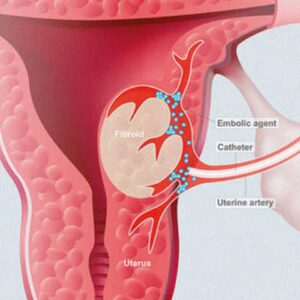
During the procedure, an interventional radiologist inserts a thin catheter into an artery in the groin or wrist. Using real-time X-ray guidance, the catheter is threaded through the blood vessels until it reaches the uterine arteries. Small particles or embolic agents, such as tris-acryl gelatin microspheres, are then injected through the catheter into the uterine arteries. These particles block the blood flow to the fibroids, leading to their shrinkage.
By cutting off the blood supply, UFE can reduce the amount of fibroids or adenomyosis, relieve symptoms such as heavy menstrual bleeding and pelvic pain, and improve quality of life.
An interventional radiologist with expertise in UFE should perform the procedure to ensure optimal outcomes.
Uterine fibroids, also known as leiomyomas or simply “fibroids”, are non-cancerous growths that develop in the uterus. They are composed of smooth muscle cells and fibrous connective tissue. Fibroids can vary in size, ranging from small, pea-sized nodules to large tumors that can distort the shape and size of the uterus.
Uterine fibroids can be diagnosed through physical examinations or imaging tests. Ultrasounds provide images of the uterus to identify the size, number, and location of fibroids. Magnetic Resonance Imaging (MRI) can offer detailed images for further evaluation. Hysteroscopy involves inserting a thin tube with a camera into the uterus to visualize the uterine cavity. These diagnostic methods assist in identifying fibroids and determining appropriate treatment options.
Adenomyosis is a condition where the endometrial tissue grows into the muscular wall of the uterus, causing the uterus to become enlarged and resulting in symptoms such as heavy and painful menstrual periods.
An interventional radiologist is a medical specialist who uses minimally invasive imaging-guided procedures to diagnose and treat various conditions. They are trained in both radiology and interventional procedures, combining their expertise in medical imaging with therapeutic interventions.
Interventional radiologists perform a wide range of procedures using advanced imaging techniques such as fluoroscopy, ultrasound, and computed tomography (CT). These procedures are typically less invasive than traditional surgery and often require only a small incision or needle puncture.
By utilizing image guidance, interventional radiologists can precisely target and treat conditions while minimizing the risks and recovery time associated with open surgery. They work collaboratively with other healthcare professionals to provide comprehensive patient care and offer minimally invasive treatment options for various diseases and conditions.
The symptoms of uterine fibroids can vary depending on the size, number, and location of the fibroids, as well as individual factors. Some women with fibroids may experience no symptoms at all, while others may have one or more of the following:
1. Heavy or prolonged menstrual periods (menorrhagia): This is a common symptom of fibroids. Women may have periods that last longer than usual or experience heavy bleeding, requiring frequent changing of sanitary pads or tampons.
2. Pelvic pain or pressure: Fibroids can cause discomfort or pain in the pelvic area. Some women describe it as a dull ache, while others experience sharp, intense pain.
3. Abdominal swelling or bloating: Large fibroids can cause the abdomen to enlarge or feel swollen or bloated.
4. Frequent urination: Fibroids located near the bladder can put pressure on it, leading to a frequent urge to urinate or difficulty emptying the bladder completely.
5. Constipation: Fibroids that press against the rectum may cause constipation or difficulty passing stools.
6. Backache or leg pain: Fibroids can exert pressure on nearby nerves, resulting in back pain or pain in the legs.
7. Pain during sexual intercourse: Fibroids may cause discomfort or pain during sexual intercourse (dyspareunia).
8. Infertility or recurrent miscarriages: Depending on their size and location, fibroids can interfere with the implantation of a fertilized egg or cause complications during pregnancy.
Treatment options for uterine fibroids depend on various factors such as the severity of symptoms, the size and location of the fibroids, and the individual’s desire for future fertility. Some common treatment options include:
1. Watchful waiting: If fibroids are small and not causing any significant symptoms, a healthcare provider may recommend monitoring the condition without immediate intervention. Regular check-ups and monitoring can help ensure that any changes in symptoms or fibroid size are promptly addressed.
2. Medications: Certain medications can be prescribed to help manage symptoms or shrink fibroids. These may include hormonal contraceptives, such as birth control pills, to help regulate menstrual bleeding and alleviate pain. Gonadotropin-releasing hormone (GnRH) agonists can temporarily shrink fibroids by inducing a menopause-like state. Nonsteroidal anti-inflammatory drugs (NSAIDs) can help alleviate pain.
3. Minimally invasive procedures: Various minimally invasive procedures can be performed to treat uterine fibroids while preserving the uterus. These include:
– Uterine fibroid embolization (UFE): This procedure involves blocking the blood supply to the fibroids, causing them to shrink and reduce symptoms.
– Radiofrequency ablation: It involves using heat energy to destroy fibroid tissue.
– Magnetic resonance-guided focused ultrasound surgery (FUS): This non-invasive procedure uses focused ultrasound waves to destroy fibroids.
4. Surgery: In cases where fibroids are large, causing severe symptoms, or affecting fertility, surgical interventions may be necessary. The two primary surgical options are:
– Myomectomy: This procedure involves the surgical removal of fibroids while preserving the uterus. It can be performed through various techniques, including hysteroscopy, laparoscopy, or traditional open surgery.
– Hysterectomy: This surgical procedure involves the complete removal of the uterus. It is typically recommended for women who do not wish to have children in the future or have severe symptoms that do not respond to other treatments.
Uterine fibroid embolization (UFE) is a minimally invasive procedure for treating uterine fibroids. Unlike traditional surgery such as myomectomy or hysterectomy, UFE does not involve the removal of fibroids or the uterus itself. Instead, UFE blocks the blood supply to the fibroids by injecting embolic agents into the uterine arteries, causing the fibroids to shrink. UFE offers a shorter recovery time, avoids major abdominal incisions, and preserves the uterus. However, traditional surgery may still be necessary in certain cases, depending on factors such as the size and location of fibroids, severity of symptoms, and individual preferences.
Recovery after uterine fibroid embolization (UFE) is typically shorter compared to traditional surgery. Most women can go home the same day or the following day. Some post-procedure discomfort, such as cramping or pelvic pain, may be experienced and can be managed with pain medication. Resting and avoiding strenuous activities are recommended during the initial recovery period. Menstrual changes, such as lighter and more regular periods, may occur. Regular follow-up appointments are important to monitor progress.
While all patient experiences are individual, patients should expect moderately intense cramping and pelvic discomfort for approximately 24-48 hours following UFE. This will occur despite aggressive pain control and stool softening regimens. The pain actually means that the treatment is working and is significantly better after the first night or two.
Some patients may also experience symptoms similar to a mild flu, including fatigue, nausea, muscle aches, with most women feeling back to normal within 7-10 days.
Uterine fibroid embolization (UFE) is generally considered a safe procedure, but it does carry some risks and potential complications. These can include:
1. Pain and discomfort: After the procedure, it is common to experience pain, cramping, or discomfort in the pelvic area. This can usually be managed with pain medication.
2. Infection: Although rare, there is a small risk of infection at the puncture site or within the uterus.
3. Damage to surrounding organs and tissues: During the catheter insertion, there is a small possibility of injury to nearby structures such as the bowel, bladder, or blood vessels.
4. Premature menopause: In rare cases, the procedure may disrupt the blood supply to the ovaries, leading to a condition similar to menopause. This can result in symptoms such as hot flashes, vaginal dryness, and infertility.
5. Fibroid regrowth: While UFE can effectively shrink existing fibroids, there is a small chance that new fibroids may develop or that existing ones may regrow over time.
6. Post-embolization syndrome: Some women may experience a temporary syndrome characterized by pain, fever, nausea, and fatigue following the procedure. These symptoms usually resolve within a few days.
While UFE can be an effective treatment for uterine fibroids, it can have potential effects on fertility. The impact of UFE on fertility depends on several factors, including the patient’s age, the extent of the fibroids, and the technique used during the procedure.
UFE has been associated with a decreased ability to conceive, although the exact magnitude of the impact is still a subject of debate among medical experts. Some studies have reported a decrease in fertility rates after UFE, while others have found no significant difference compared to other treatments or no treatment at all. In fact, many women have had successful pregnancies after UFE.
For women who definitely desire future pregnancies, a surgical myomectomy (removing the fibroid, but leaving the uterus) is generally preferred. However, only a minority of women are good candidates for this procedure, and surgical experience can be limited.
Consulting with a healthcare professional is essential to discuss individual circumstances and explore the best treatment options.
UFE treats all fibroids in the uterus.
The timeline for seeing results after uterine fibroid embolization (UFE) can vary among individuals. In general, women often experience a decrease in pain and heavy menstrual bleeding within a few days to weeks following the procedure. However, the full effect of UFE, including fibroid shrinkage that improves pelvic bloating/fullness, takes up to 6-9 months.
For the vast majority of patients with fibroids, uterine fibroid embolization (UFE) is an excellent treatment option. The appropriateness of UFE as a treatment option depends on various factors, including the size, number, and location of the fibroids, as well as the individual patient’s symptoms and reproductive goals.
During uterine fibroid embolization (UFE), tiny particles are used to block the blood flow to the uterine arteries and fibroids. The most commonly used particles are tris-acryl gelatin microspheres. These particles are biocompatible and have been specifically designed for use in embolization procedures.
In most cases, UFE is performed under conscious sedation & local anesthesia.
Conscious sedation involves the administration of medications to help you relax and feel drowsy during the procedure. You may be in a semi-conscious state and still able to respond to instructions and communicate with the medical team.
Local anesthesia is used to numb the area where the catheter is inserted, typically in the groin region. This ensures that you don’t feel pain or discomfort during the procedure.
In some cases, an abdominal nerve block may be performed to help manage pain after the procedure.
General anesthesia, which puts you completely asleep, is generally not required for UFE unless there are specific medical considerations or additional procedures being performed in conjunction with the embolization.
On average, UFE typically takes around 1 to 2 hours to complete. However, it’s important to note that this is an estimate, and the actual time can vary.
Yes, you will need someone to drive you home following your procedure.
It is also a good idea to have someone stay with you for the first couple of nights to help manage pain and medications just in case your symptoms are severe.